



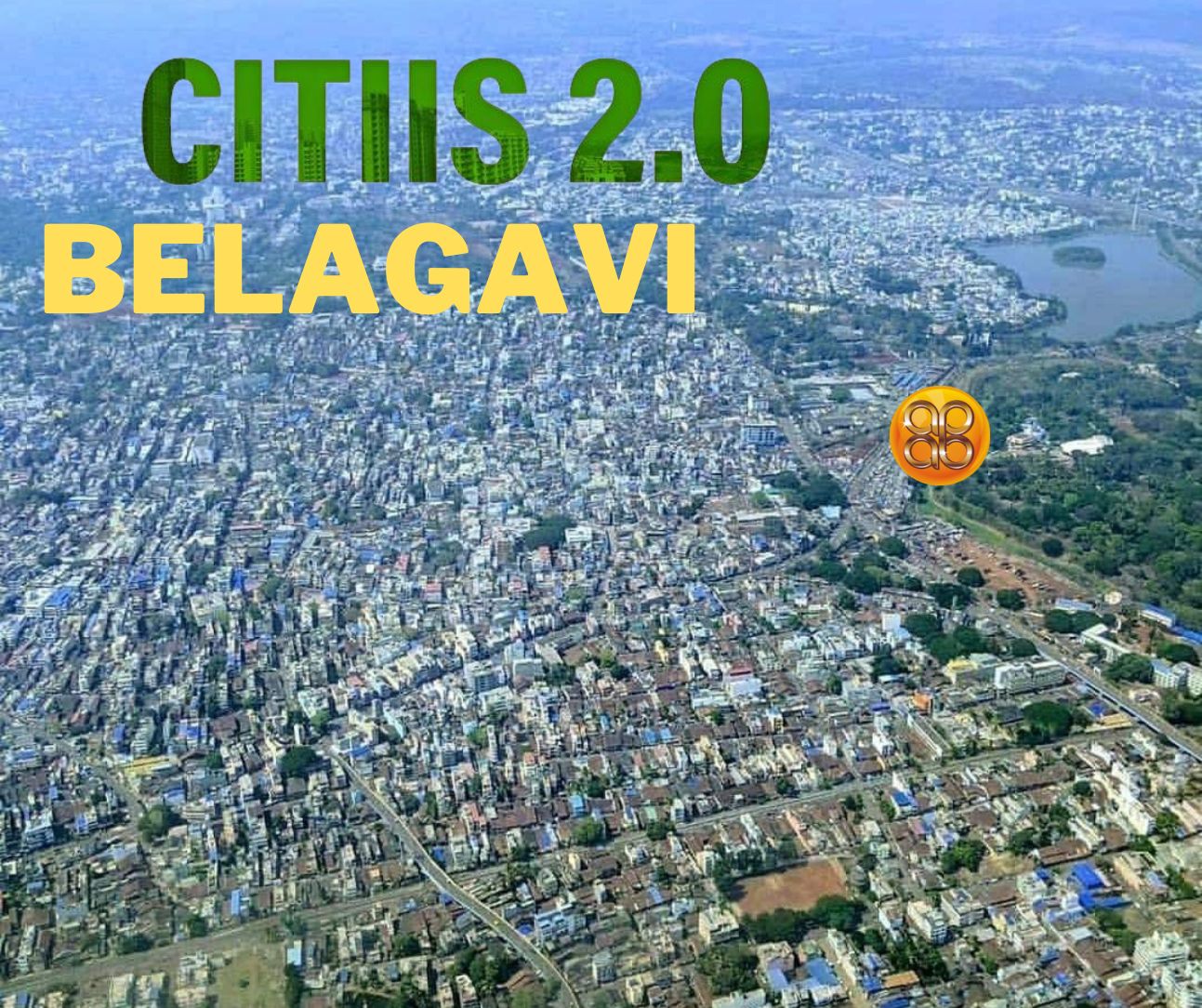
Belagavi risks losing the prestigious CITIIS 2.0 urban development project due to administrative delays, procedural lapses, and a funding dispute between the State Government and the Belagavi City Corporation (BCC). Considering the seriousness of the issue, the BCC has convened an emergency special council meeting on Monday to take a final decision regarding the project.
The City Investments to Innovate, Integrate and Sustain (CITIIS) 2.0 programme, launched by the Union Ministry of Housing and Urban Affairs in November 2023, aims to promote circular economy initiatives such as integrated solid waste management systems in selected cities across India. Only 18 cities were selected nationwide, with Belagavi being the only city from Karnataka.
Belagavi secured the project in March 2024 after presenting its proposal titled “Vision to Implement Integrated Solid Waste Management and Sustainability Projects (VIISWAS)” before a national jury in New Delhi. The project was estimated to cost ₹165.3 crore, including a central grant of about ₹75 crore, while the programme allows funding up to ₹135 crore depending on project strength.

A quadrilateral agreement for the project was signed on March 3, 2025, in Jaipur between the Union Government, the State Government, BCC, and Belagavi Smart City Limited (BSCL). As per the agreement, the Centre and the State were to contribute 40% each, while BCC was to bear the remaining 20% in three instalments. The Centre had already released ₹7.5 crore as the first instalment to begin preliminary work.
However, the project soon encountered major administrative and procedural hurdles. As per programme guidelines, the first step was conducting an Environmental and Social Impact Assessment (ESIA) and securing Environmental Clearance (EC). A tender for the study was first floated in December 2024, but the process repeatedly stalled and the same tender was floated multiple times without finalisation.
In March 2025, Globaltech Enviro Experts Pvt. Ltd. emerged as the lowest bidder, but the tender was later cancelled by officials, a move that has since become the subject of legal proceedings. The company’s director, Manjunath Banashankari, challenged the decision in court and has now approached the Supreme Court of India with a Special Leave Petition in February 2026. If the Supreme Court grants a stay, the project timeline could face further disruption.
Meanwhile, delays in appointing a consultancy agency for the ESIA studies have slowed progress significantly. Environmental clearance itself can take nearly nine months, and the delay in initiating the process now threatens to push the project beyond its permissible timeline.
Adding to the complications, the State Government has reportedly declined to release its 40% financial share, suggesting that the Urban Local Body use State Finance Commission (SFC) grants instead. This proposal has been strongly opposed by the BJP-led majority in the Belagavi City Corporation, which has refused to divert SFC funds for the project. Belagavi South MLA Abhay Patil has also alleged that the State Government is backing out of its earlier financial commitment.
BSCL has also faced criticism for failing to finalise project components and coordinate with the City Corporation to secure land for the project. Over the past month, officials from BSCL were reportedly called several times by senior officials from the Urban Development Department and KUIDFC to finalise the proposal, but the submissions were rejected due to inadequate preparation.
Amid the uncertainty, BSCL is reportedly considering scaling down the project to about ₹75 crore, relying only on the Centre’s grant and BCC’s contribution.
The Belagavi City Corporation will now meet in a special general body session to decide on releasing the first instalment of its 20% share. However, civic leaders acknowledge that simply releasing funds may not be enough. Without timely decisions, administrative coordination, and resolution of the legal and financial hurdles, Belagavi could lose a major ₹75-crore opportunity to modernise its solid waste management system and strengthen its sustainable urban infrastructure.
Very bad news for the politicians and contractors