



The much-anticipated compressed biogas (CBG) project in Belagavi, estimated at ₹54.20 crore, has been put on hold due to the unavailability of suitable land. The project, awarded to Gas Authority of India Limited (GAIL), has faced strong opposition at all previously identified locations.
Initially, two sites within the city were shortlisted, but both drew resistance from local residents. Earlier, the project was also proposed within the Turmuri waste management facility, where 10 acres out of 66 acres were to be leased to GAIL for 25 years. However, protests from Turmuri villagers forced authorities to drop that plan. Subsequent sites identified in the north and south zones of the city also faced similar opposition.
The Belagavi City Corporation has now identified an alternative location and forwarded the proposal to the Urban Development Department for approval.

The project is part of the Central Government’s GOBARdhan Scheme initiative, under which GAIL and Hindustan Petroleum Corporation Limited (HPCL) have been tasked with executing waste-to-gas projects across Karnataka. Belagavi was assigned to GAIL due to its strategic location along the Dabhol–Bengaluru gas pipeline.
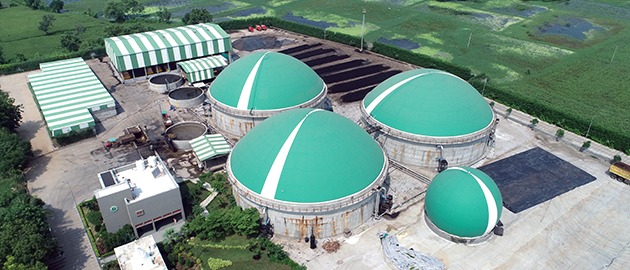
Administrative approval for the project was granted on November 20, 2025, but even after five months, land allocation remains unresolved. The city generates around 150 tonnes of wet waste daily, which was to be processed into biogas under this initiative.
A key highlight of the project is that it imposes no financial burden on the Municipal Corporation. GAIL is set to bear the entire capital cost of ₹54.20 crore along with an annual operational expense of approximately ₹7.69 crore.
What is Compressed Bio Gas (CBG)?
CBG is produced through the anaerobic decomposition of organic waste such as agricultural residue, cattle dung, municipal solid waste, and sewage. The resulting biogas—comprising 55–60% methane—is purified and compressed to match the properties of CNG. This makes it a viable green fuel alternative for automotive, industrial, and commercial use, contributing to sustainable waste management and energy generation.
Why there is an opposition from locals on setting up the plant ?