



The death of veteran actor Nana Patekar brings back a lesser-known chapter in Belagavi’s cinematic history – his deep association with the city while making Prahaar: The Final Attack, the 1991 film that marked his debut as a director.
Patekar died at the age of 75 on Thursday morning in Goa. He was found unresponsive at his residence after complaining of severe chest pain and was taken to Manipal Hospital, where he was declared dead at 5.20 am.
For Belagavi, however, Patekar’s connection goes back more than three decades.

He came to Belagavi to become a commando
When Patekar set out to make Prahaar, he wanted the military portions of the film to be authentic. Instead of simply learning a few drills for the camera, he immersed himself in the Indian Army’s training environment.
He underwent rigorous training at the Maratha Light Infantry Regimental Centre in Belagavi, working alongside soldiers and experiencing the physical demands of commando training.
Contemporary reporting by India Today documented his training at the centre. In a later interview with Rediff, Patekar recalled: “I trained with the Indian Army for almost three years. In the process, I wrote the script.”
That experience became the foundation of Prahaar.
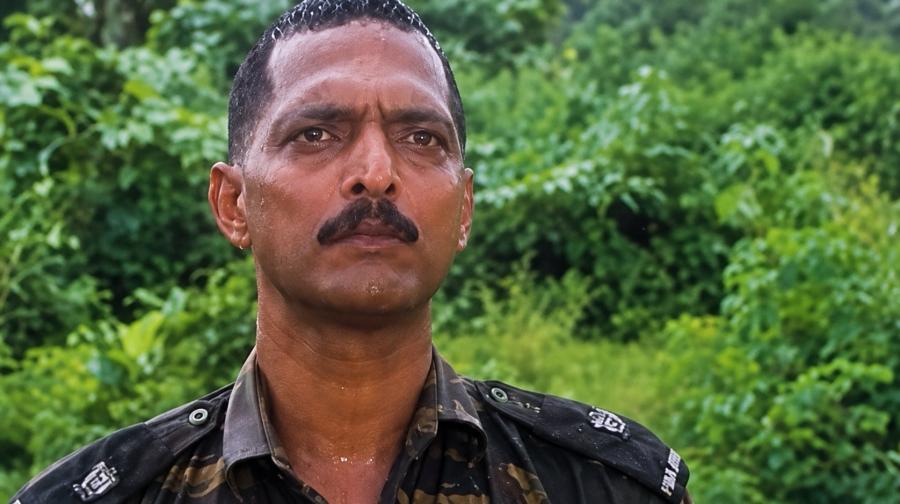
The film was actually shot inside the Army establishment
The Belagavi connection went beyond training.
General Vijay Kumar Singh, who later became Chief of Army Staff, was serving as an instructor at the Commando Training Centre in Belagavi around 1990. He later recalled that Prahaar was being shot inside the centre.
Singh himself appeared briefly in the film.
In the scene, a senior Army officer briefs Major Pratap Chauhan, played by Patekar, before a rescue operation. Singh appears as the real Army officer explaining the operational plan.
Speaking to India Today years later, Singh recalled that the filmmakers wanted a genuine officer for the scene and asked him to participate.
It meant that one of the film’s unusual cameos was not an actor playing an Army officer, but a serving officer from the very Army establishment where the film was being shot.
Another important link was Colonel Sunil Deshpande, an officer of the 2nd Maratha Light Infantry, popularly known as the “Kali Pachwin”. Deshpande served as a military adviser to the film and was associated with the Commando Training Centre in Belagavi.
Patekar’s character, Major Pratap Chauhan, was also portrayed as an officer of the Maratha Light Infantry.
Training that went beyond the camera
Patekar’s preparation was demanding even by film-industry standards.
He has recalled receiving special permission from the Central Government to undergo the training, with the Army requiring him to sign a bond absolving it of responsibility in case of an accident.
The physical training and survival exercises gave the film a realism that could not easily have been recreated on a conventional film set.
Some of the filming itself was equally demanding. In one sequence, actors had to move along a narrow platform around 60 feet above the ground. Actor Shivkumar Subramaniam, who was afraid of heights, became extremely frightened during the shoot.
A film remembered by Army personnel
Prahaar follows Major Pratap Chauhan, a commando instructor who trains young soldiers before one of his former trainees becomes involved with criminal elements.
The film’s portrayal of military training has continued to be remembered by Army personnel.
Major General (retd) Yash Mor, who was posted in Belagavi during the making of Prahaar, later recalled seeing the film and regarded its depiction of Army and commando training as authentic.
For Belagavi, that authenticity has a special significance. The city was not merely a shooting location – its military training environment and personnel directly influenced the film.
Patekar’s preparation for Prahaar went far beyond the usual military training given to actors.
- Territorial Army connection: Patekar was associated with the Territorial Army as a Captain, and his military training later proved significant during the Kargil War. Some accounts date his commission to 1988, while others refer to his honorary Captaincy in 1990; the precise chronology should therefore be stated carefully.
The Belagavi story in Army accounts
Patekar’s association with the Army has subsequently featured in numerous accounts of Prahaar and of his involvement during Kargil.
His three-year association with the Maratha Light Infantry is repeatedly cited as the foundation for the military authenticity of Prahaar. Patekar himself said that the experience taught him discipline and profoundly influenced the making of the film.
His association with the armed forces also continued well beyond the film. During Kargil, his earlier training became relevant when he sought permission from then Defence Minister George Fernandes to join troops at the front.
From Belagavi to Kargil
Patekar’s association with the Army continued long after Prahaar.
During the 1999 Kargil War, he sought permission to join Army personnel near the Line of Control. He later recalled spending more than two weeks with troops and working at a military hospital.
His earlier military training for Prahaar helped establish his credibility with the Army and gave him an unusual connection with soldiers that continued throughout his life.
Nana Patekar returned to Belagavi
Patekar’s association with Belagavi did not end with Prahaar. He returned to the region several times over the years.
In 2010, he was in Belagavi for the shooting of his Kannada film Yaksha, with action sequences filmed at Kittur Fort.
In 2020, he visited Belagavi for the birth centenary celebrations of noted artist K.B. Kulkarni, inaugurating the celebrations at Lokmanya Rangmandir.
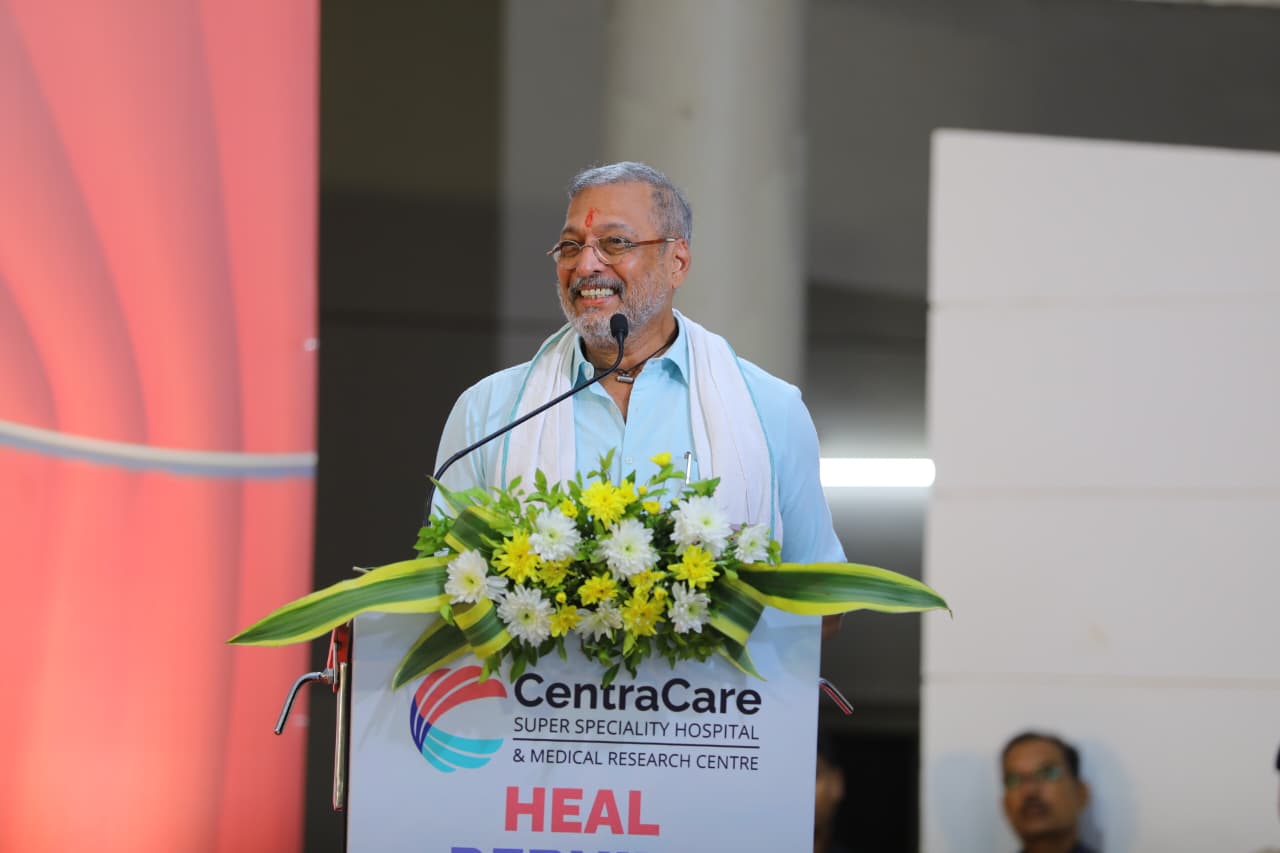
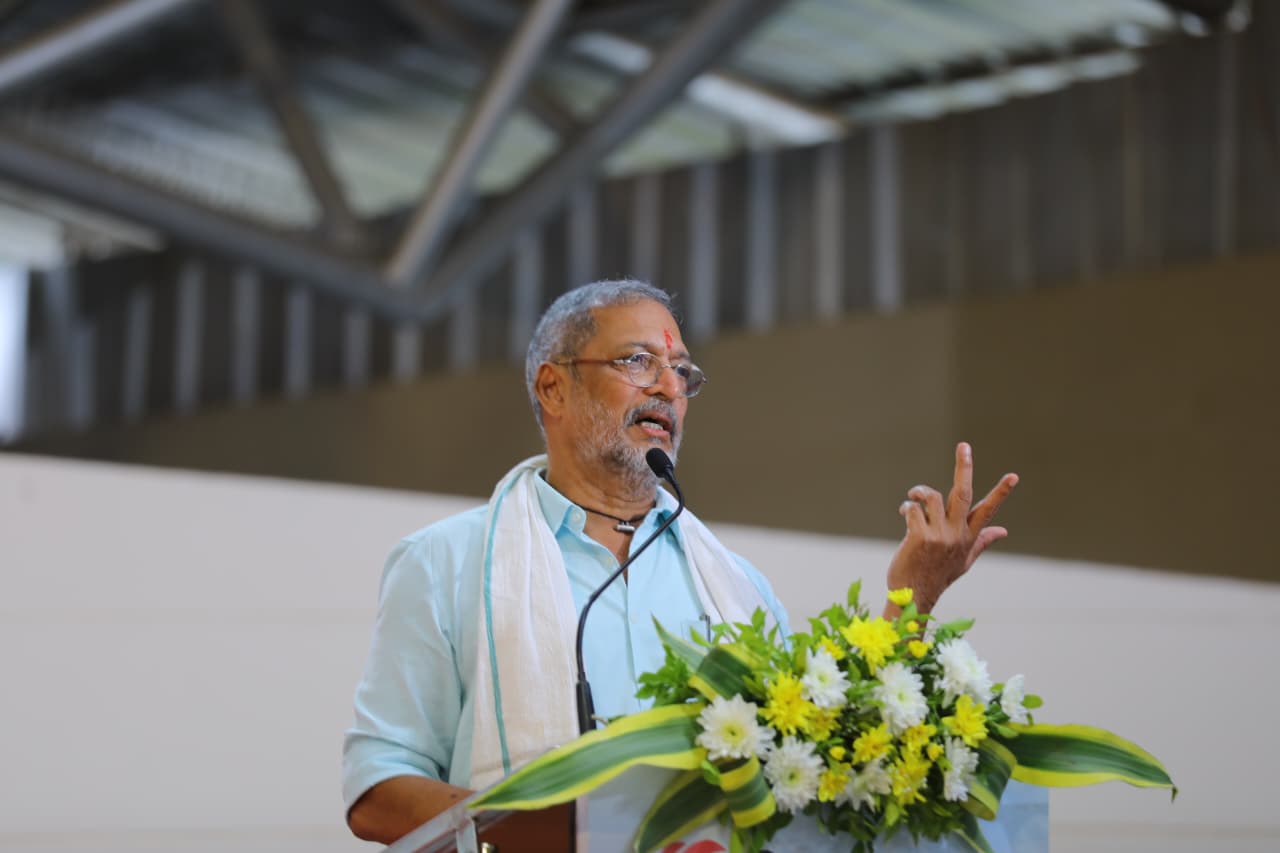
In 2025, he returned to Belagavi for the inauguration of CentraCare Super-Specialty Hospital in Tilakwadi, where he spoke about humanity, healthcare and society’s responsibility towards those in need.
Thus, over more than three decades, Patekar’s association with Belagavi extended from Army training and filmmaking to art, public events and healthcare.
A lasting Belagavi chapter
Released in 1991, Prahaar: The Final Attack was Patekar’s first film as a director and starred him alongside Madhuri Dixit, Dimple Kapadia, Habib Tanvir and Gautam Joglekar.
For Belagavi, however, the film represents more than another Bollywood production that visited the city.
Patekar trained with soldiers here. He worked with Army instructors. The film was shot inside the military training establishment, and a serving Army officer from Belagavi appeared alongside him.
The city’s military culture became part of the film itself.
More than three decades later, Prahaar remains one of the most distinctive cinematic links between Nana Patekar and Belagavi.
He did not simply come here to play a commando.
He came to Belagavi to learn how to become one – and took that experience to the screen.
Uday ji,
Apt and timely post.
Many aspects are repeating in the report. Could you please delete the repetations and make it more concise.
Thank you