



The long-pending Belagavi–Kolhapur direct railway line project has taken a significant step forward, with the much-awaited survey work now underway near Nippani. Considered a vital infrastructure project for the Karnataka–Maharashtra border region, the proposed broad-gauge railway line is expected to strengthen connectivity and boost economic activity across both states.
The proposed route, estimated to be around 58 km long, will pass through Parakanhatti and Sankeshwar before reaching Kolhapur. A technical team from the Railway Administration has commenced field inspections, measurements and route planning as part of the Preliminary Engineering and Traffic (PET) Survey.
Approximately ₹55 lakh was sanctioned for the exercise. Modern technologies such as drones, GPS-based mapping and digital terrain assessment are being used to ensure accurate route planning.

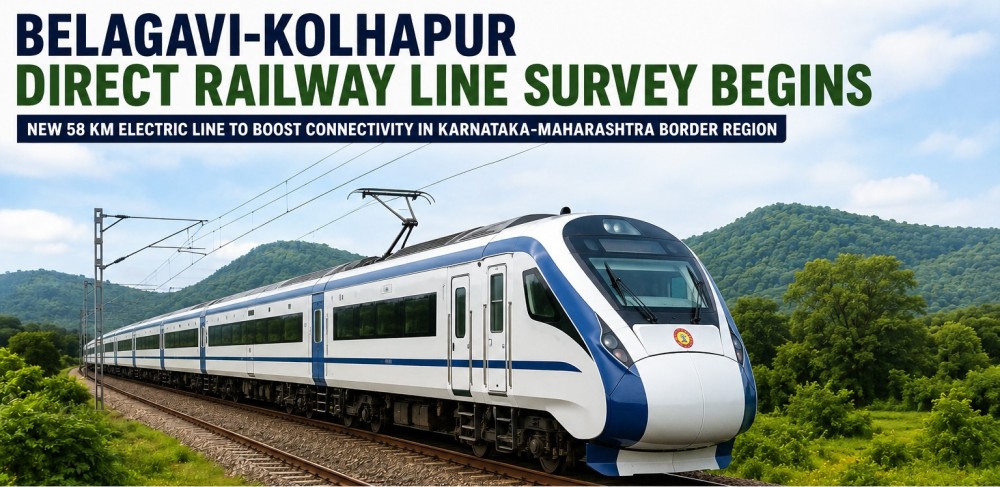
At present, passengers travelling between Belagavi and Kolhapur by rail must take a longer route via Miraj, resulting in increased travel time and cost. The proposed direct rail link is expected to substantially reduce travel time between the two cities and improve accessibility across the border region.
The railway corridor will also enhance connectivity for key centres including Dharwad, Kittur, Belagavi, Sankeshwar and Kolhapur. Survey teams are currently assessing villages, agricultural lands, hills, rivers and streams along the proposed alignment. Planning for bridges, tunnels and potential new railway stations is also part of the ongoing exercise.
The project builds upon earlier surveys conducted over the past decade. In 2012, Central Railway, Pune, surveyed the 191-km Karad–Belagavi route, while South Western Railway, Hubballi, carried out separate studies for the Pachhapur–Sankeshwar–Kolhapur corridor. The current survey is expected to provide a more detailed roadmap for taking the project forward.
Once completed, the railway line is expected to provide a major boost to trade, industry, tourism and passenger movement between northern Karnataka and western Maharashtra. Kolhapur’s thriving textile and commercial sectors, along with religious tourism destinations such as the Ambabai Temple, are likely to benefit significantly from the improved rail connectivity.
Dear sir survey is completed year ago, proposal pending at railway board. Presently no any site activity running on site
Over the years they are giving just a hope. Multiple times survey has been done. Unfortunately we don’t know when the actual work is going to start. It is very much necessary railway line to connect karnataka and Maharashtra to increase the merciment all products to reduce the transportation cost and many other things we are very fensive for this railway line. Kindly take an action and try to begin the actual work as soon as possible. Don’t waste time in doing Survey again .