



What began as a citizen-led effort to identify forgotten stepwells has culminated in the remarkable revival of a 300-year-old heritage well in Mutga, bringing back to life a hidden piece of Belagavi’s history and demonstrating the power of community-driven conservation.
The historic well, located at Kanchveer Nagar near Airport Road in Mutga village, was first brought to public attention following the Belagavi Stepwells Campaign initiated by the INTACH Belagavi Chapter in collaboration with Maharashtra Barav Moheem (Maharashtra Step-wells Campaign). The campaign, which sought information on neglected and forgotten stepwells across the district, was widely amplified by All About Belgaum, leading to a tip-off from a reader about an unusual stone structure opposite Shri Kanchveer Temple.
A subsequent site inspection by INTACH members revealed an elongated stone-built well buried under dense vegetation, silt, debris and years of neglect. The structure’s distinctive design — featuring a rectangular section connected to a circular chamber through an elegant stone archway — immediately highlighted its historical and architectural significance.

Recognising its heritage value, Pyaas Foundation stepped forward to undertake the restoration. Supported by a generous grant from Dr. Nitin Khot, the Foundation launched an extensive cleaning and rejuvenation effort.
For nearly three decades, the well had remained buried beneath layers of silt, sewage water, plastic waste, rubble and discarded bottles. Volunteers from Pyaas Foundation, assisted by local residents and supporters, painstakingly cleared the accumulated debris and restored the well to its original depth of nearly sixty feet before excavating a further ten feet.
Their efforts yielded an exciting discovery. Fresh water springs were found flowing at the bottom of the structure, confirming that ancient aquifers beneath the well remained active despite decades of neglect. The clear water emerging from the depths stands as a powerful reminder of the effectiveness and sustainability of traditional water conservation systems.
The restoration has also uncovered striking architectural features, including beautifully crafted stone arches, masonry work and columns that reflect the engineering expertise of a bygone era. Historians and local elders believe the structure may date back to the Adilshahi or early Maratha period, making it one of the region’s significant surviving heritage water structures.
Adding to its historical intrigue, local oral traditions suggest that the well once served as a discreet meeting place for freedom fighters and revolutionaries during India’s struggle for independence.
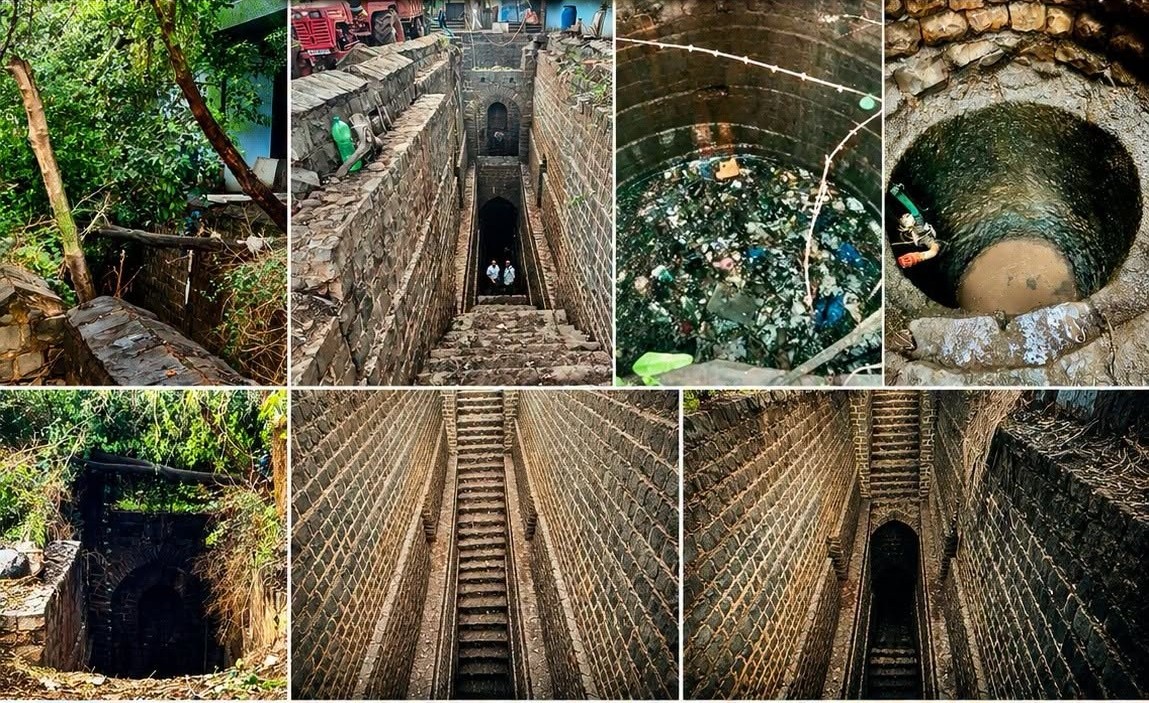
Since the completion of the initial restoration phase, the site has attracted a steady stream of visitors. Elderly residents have revisited the well with memories of its past importance, while younger generations have been introduced to a remarkable example of Belagavi’s forgotten heritage.
Beyond its historical significance, the revived well has renewed discussions about water conservation and the importance of preserving traditional water sources. At a time when water scarcity is becoming an increasing concern, conservationists point out that structures such as stepwells, wells and traditional waterways can play an important role in sustainable water management.
The Mutga restoration stands as a shining example of what can be achieved when citizens, heritage organisations and community groups work together. From a public appeal for information to the rediscovery and revival of a forgotten monument, the project has transformed a neglected structure into a symbol of heritage conservation, environmental stewardship and community pride.
In restoring the Mutga well, Pyaas Foundation has done more than clean a historic structure—it has revived a forgotten story of Belagavi and reconnected a community with its roots.
Good Job
Bravo
Team Work
WORKS !
Pyaas Foundation work is an exceptionally excellent attempt to rejuvenate the sources of water – especially required to fight the dangerous consequences of Super El-Nino & similar natural and man-made disasters! 😊🙏💐
Great accomplishment! Kudos!!
Great job …..need more such institutions collab with govt and industries for better sustainable future