



Water scarcity in the Malaprabha river basin, including villages in Khanapur taluk where the river is now reportedly without water, was among the key concerns raised at a two-day stakeholder meeting held in Dharwad on October 24 and 25.
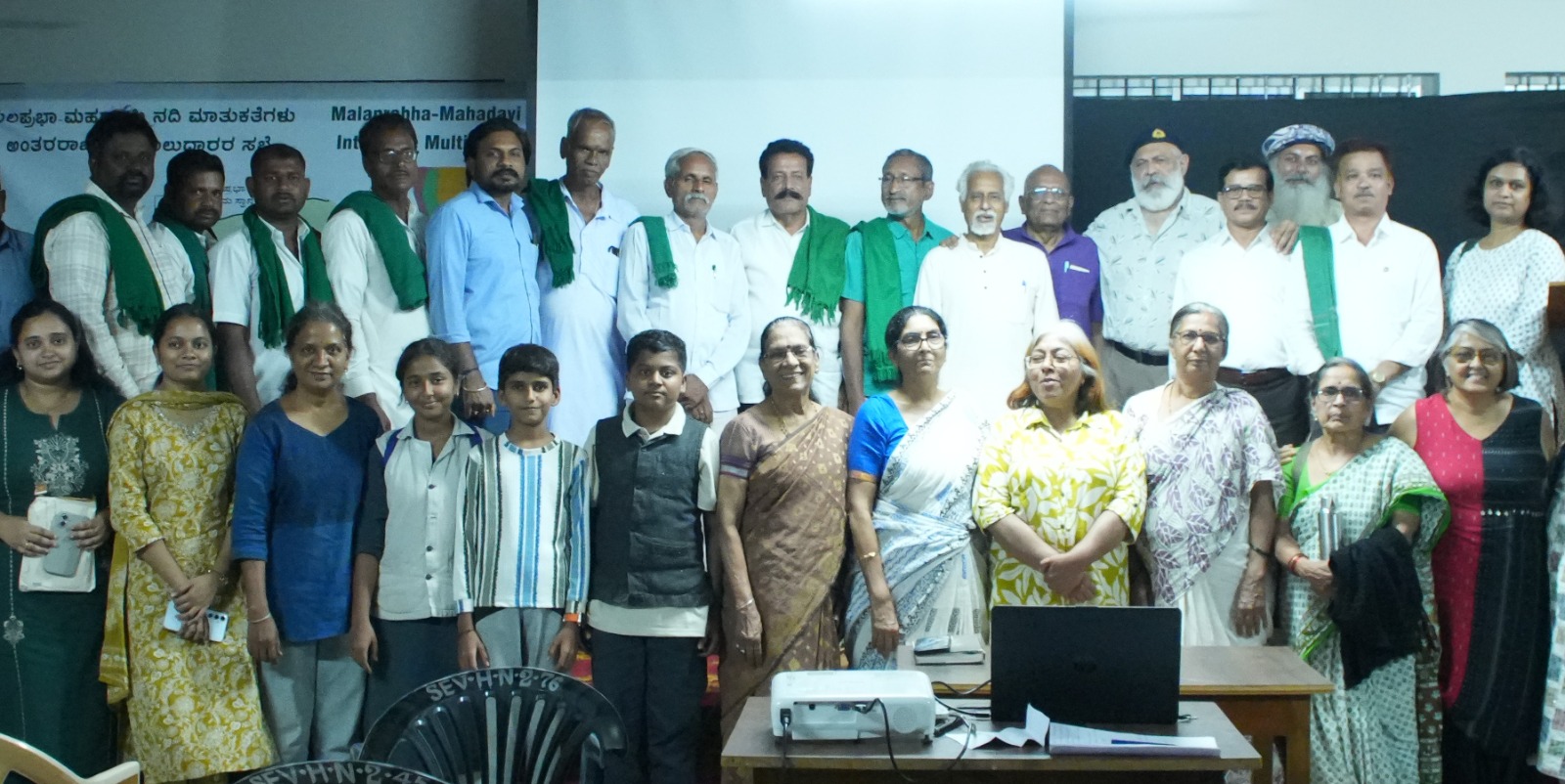
Farmers, researchers, environmentalists, legal experts and citizens from Karnataka, Goa and Maharashtra participated in the meeting at Sevalaya, discussing water management, river conservation and the challenges faced by communities dependent on the Mahadayi and Malaprabha rivers.
Farmers from Khanapur highlighted the shortage of water in villages along the Malaprabha, including Tivoli, Teerthkunde and Uchawade. According to the participants, these villages face water shortages after January, leaving farmers struggling to sustain their crops. The situation has now reportedly worsened, with no water flowing in the Malaprabha River in Khanapur.

Farmers from other parts of the Malaprabha basin, including Nargund, Badami, Gadag, Ramdurg and Hubballi-Dharwad, also highlighted the shortage of water reaching the tail-end areas of the Naviluteertha dam command region. They said water was being diverted for drinking purposes, filling village tanks and industrial use, leaving inadequate supplies for agriculture.
The meeting also heard concerns from farmers in the Badami region about flooding downstream of the Renukasagar reservoir. Participants attributed the problem partly to siltation and called for comprehensive river basin development, crop protection and flood-control measures before bringing additional water from the Mahadayi into the Malaprabha basin.
Khanapur farmers also raised concerns over crop losses caused by wild animals, including elephants, bison, wild boar and monkeys. They warned that the proposed Bhandura Nala diversion project could result in the loss of productive farmland.
Call for equitable water use
Participants raised questions about the allocation and use of water across the Malaprabha basin, including the requirements of agriculture and the consumption of water by sugar factories and other industries. Experts called for greater water discipline, efficient farming practices and measures to augment and rejuvenate water resources.
The meeting emphasised the importance of protecting the Bhimgad and Mhadei wildlife sanctuaries and the Western Ghats, describing these ecosystems as vital to the rivers and their long-term water security.
Participants from Goa also outlined their concerns about protecting the Mahadayi, known as the Mandovi in Goa, and the river-dependent livelihoods, agriculture and ecosystems sustained by its waters.
White paper on water use demanded
The meeting concluded with a set of recommendations, including an urgent solution to the water stress faced by farmers, transparent and legally compliant resolution of the Mahadayi issue, and stricter scrutiny of water-intensive industries.
Participants also called on the governments of Karnataka, Goa and Maharashtra to publish a white paper detailing the current use of water resources. A separate white paper on forest conservation, management and afforestation policies was also sought.
The gathering stressed that the interests of farmers and the conservation of river ecosystems must be addressed together through dialogue, cooperation and transparent water management, rather than political interference.
The meeting was convened by the National Alliance of People’s Movements (NAPM), South Asians People’s Action on Climate Crisis (SAPACC), Eco Watch and other organisations.