




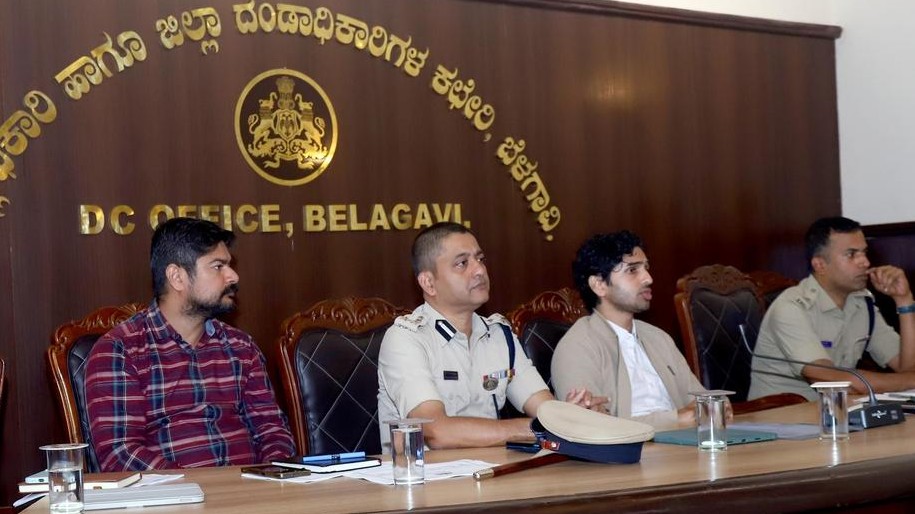
With river levels rising steadily following heavy rainfall across Belagavi district and neighbouring Maharashtra, Deputy Commissioner Mohammad Roshan has directed all departments to prepare for possible flood situations and ensure emergency response mechanisms are in place.
Chairing a meeting of the District Disaster Management Authority on Tuesday, the Deputy Commissioner said continuous rainfall over the past three days in nine taluks of Belagavi district and upstream catchment areas in Maharashtra has significantly increased inflows into the Krishna, Doodhganga, Vedganga, Ghataprabha, Malaprabha, Hiranyakeshi and Markandeya rivers.
He warned that villages along riverbanks could face flooding if water levels continue to rise and instructed officials to remain on high alert.

Ten low-lying bridges in Chikkodi, Nippani, Gokak and Bailhongal taluks remain submerged, disrupting traffic and cutting off connectivity to several villages.
Meanwhile, residents of Kongla, Pastoli, Gavaali and other villages in Khanapur taluk continue to rely on makeshift wooden plank and rope bridges to cross the Banduri Nallah and other streams in the Western Ghats region.
The Deputy Commissioner directed officials to:
- Open flood control helpline centres at both district and taluk levels.
- Restrict movement of people and livestock on vulnerable bridges that may be at risk of collapse.
- Ensure police coordinate with other departments to close unsafe routes.
- Keep SDRF and Fire & Emergency Services teams on standby round the clock.
- Arrange boats for evacuation of residents from flood-prone villages if required.
- Ensure Tahsildars remain in constant coordination with SDRF teams and report emergencies immediately.
- Carry out urgent repairs to damaged electricity poles, transformers and power lines in rural areas.
The district administration has identified 397 relief centres for evacuation and 129 cattle camps for livestock in the event of flooding.
A total of 41 rescue boats have been kept ready, including:
- 5 boats with the SDRF,
- 9 with the Fire and Emergency Services Department, and
- 27 with various taluk administrations.
Officials have been asked to inspect all relief centres and ensure they are equipped with essential facilities.
The Deputy Commissioner also instructed officials to identify dilapidated houses and shift residents to safer locations if rainfall intensifies. Surveys of partially and fully damaged houses are to be conducted, while adequate fodder supplies for livestock must be maintained.
Health officials have been asked to stock essential medicines, monitor the risk of water-borne and infectious diseases, prepare reports on dengue testing, and ensure unsafe drinking water sources are closed to prevent disease outbreaks.