



From Shastra-pujan and the arrival of Nandi to Simollanghan and the symbolic exchange of Apta leaves as gold, Belagavi’s traditional Dussehra continues to preserve the city’s rich cultural heritage. Ranjit Chavan-Patil recounts the significance of the rituals upheld by his family across generations.
Belagavi’s traditional Dussehra is more than a religious celebration. It is a living link to the city’s history, customs and cultural identity. Among its most distinctive rituals is the Shastra-pujan (worship of weapons), performed by the Vatandar Patil family, followed by Simollanghan and the traditional exchange of Apta leaves, regarded as symbolic gold.
Ranjit Chavan-Patil, who has witnessed the celebrations for nearly six decades, offers insights into the traditions that continue to draw devotees and residents every year.

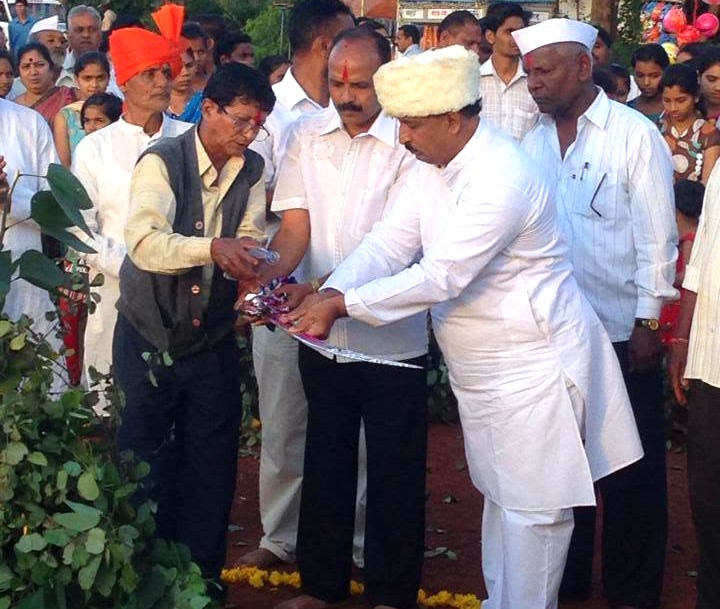
Six decades of witnessing a living tradition
Now 74, Ranjit Chavan-Patil recalls how the Dussehra rituals were observed during his father’s time, when the latter served as the Patil of Belagavi.
In earlier years, the 18 Halbas, hereditary officials associated with the tradition, participated in the festival preparations before his father performed the Shastra-pujan. Following his father’s death, the responsibility passed to his elder brother. Members of the younger generation are now also participating, helping preserve the family’s legacy.
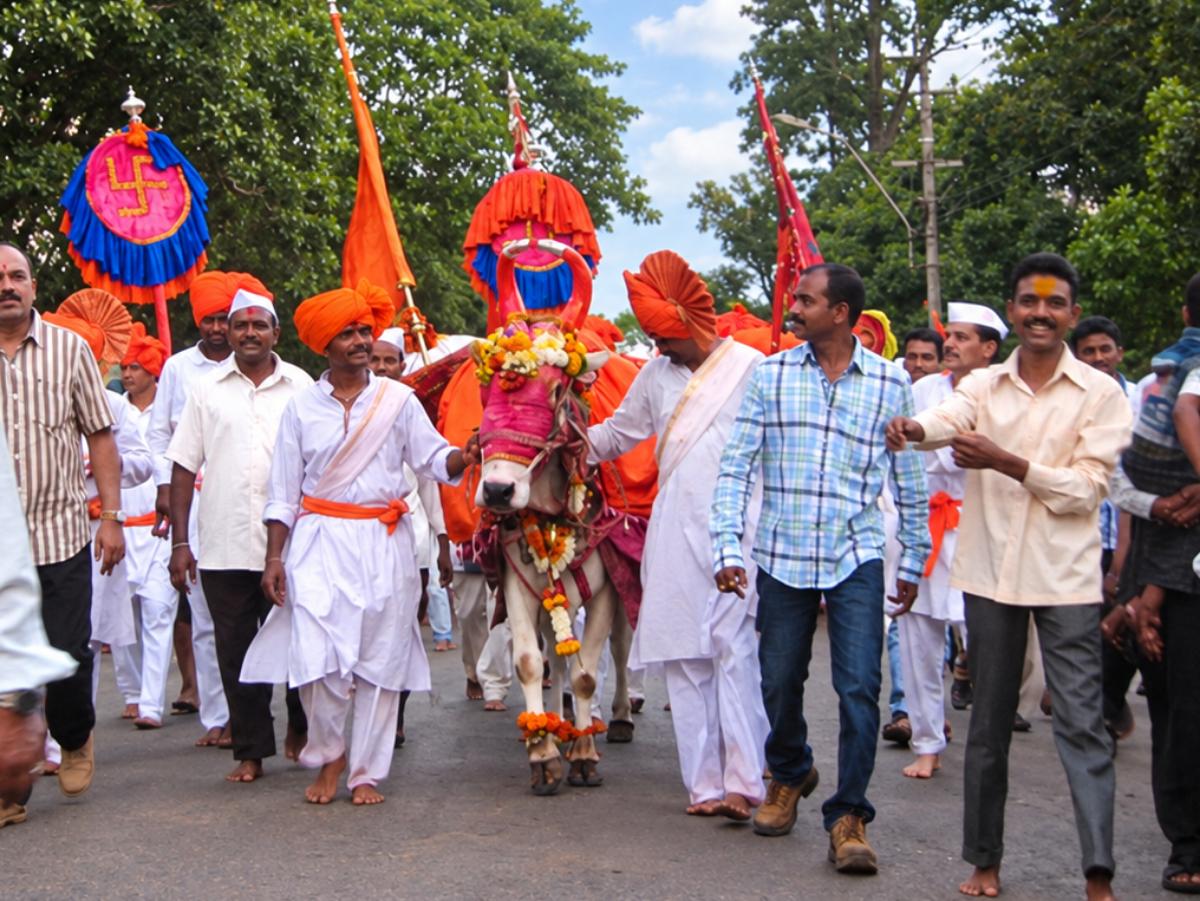
Family bears the cost of preserving the tradition
The Chavan-Patil family continues to shoulder the expenses associated with the traditional celebrations, including arrangements at the Simollanghan grounds, procuring Apta leaves and other preparations.
According to Ranjit Chavan-Patil, family members undertake these responsibilities themselves, without expecting financial assistance from others. Their efforts are driven by a commitment to preserving a tradition handed down through generations.
Palanquins converge at Hutatma Chowk
On the evening of Vijayadashami, the final day of Navratri, palanquins carrying various deities converge at Hutatma Chowk, generally between 5 pm and 6 pm.
The Nandi arrives from the Chavat Galli area, after which the procession proceeds towards the Simollanghan grounds.
As part of the distinctive custom, the Nandi is initially escorted at a slow pace up to Benyon Smith High School. From there, it is brought forward at a run. The approaching Nandi signals the Chavan-Patil family to prepare for the Shastra-pujan.
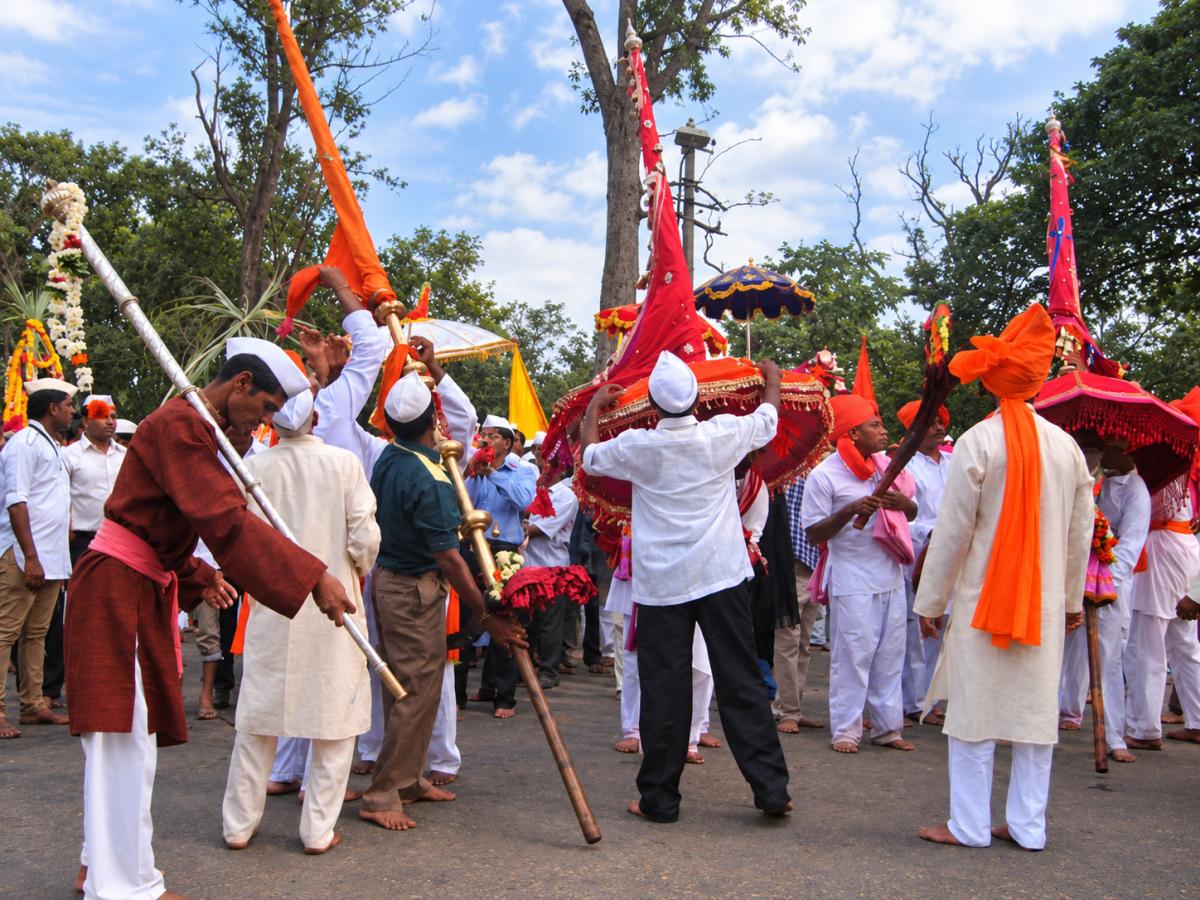
Traditional sword worship and the Apta leaf ritual
The worship of the traditional sword and the ritual involving the Apta tree are among the key highlights of Belagavi’s Dussehra celebrations.
The Chavan-Patil family’s traditional sword is worshipped near a Shami tree. Following the arrival of the Nandi, the sword is used to strike a branch of the Apta tree as part of the ritual.
Devotees gathered at the grounds then rush to collect the Apta leaves, a custom popularly associated with Sona, or gold. In Hindu tradition, these leaves symbolise gold and prosperity, and people exchange them with friends, relatives and acquaintances as a gesture of goodwill and Dussehra greetings.
The ritual draws large crowds, making it one of the most distinctive sights of Belagavi’s traditional Dussehra.

Sword returns to the family shrine
After the Simollanghan and Shastra-pujan rituals conclude, members of the Chavan-Patil family visit the Aaruti and Lakshmi temples to offer prayers to the goddesses.
They offer Apta leaves to the deities before returning home, where family members perform the Aukshan ritual. The traditional sword used during the worship is then placed in the household shrine.
The annual observance reinforces the family’s connection to its ancestral customs and religious traditions.
A cultural legacy passed down generations
Belagavi’s traditional Dussehra brings together history, faith and community participation through rituals such as Shastra-pujan, the arrival of Nandi, Simollanghan and the exchange of Apta leaves.
The continued involvement of the Vatandar Patil family ensures that these distinctive customs remain part of the city’s cultural heritage. Through the recollections of Ranjit Chavan-Patil, the significance of these rituals and the family’s role in preserving them come into focus, offering younger generations a connection to Belagavi’s past.